A climate model does not make itself
A climate model is a mathematical representation of the laws of physics. Raw computing power drives it forward, but humans remain the heart and brain of every climate model. Without them, nothing happens.


This story is originally written in Norwegian, and translated using AI (Anthropic). Original here.
CICERO researcher Kjetil Aas straightens up in his chair as around 20 faces light up on his screen. One of the week's highlights is about to begin.
Crackling voices emerge from the speakers.
To the uninitiated, the reports sound incomprehensible: "NCAR diagnostics tools", "get cupid up and running", "runtime dependencies". Occasionally, more familiar terms surface—the Pacific, the Arctic, boreal forest—and something about the Labrador Sea freezing over.
Data dominates the natural science side of climate research. Graphs, model runs, particle measurements, atmospheric chemistry, temperatures, gigatons, longwave and shortwave radiation. Everything that can be measured, recorded, and categorized. Powerful computers chew through complex equations describing physical laws.
The humans seem to disappear in the process, lost among the algorithms.

But here they are, on Kjetil Aas's screen.
"He's an expert on oceans, she's an expert on land processes, those two specialize in the atmosphere," he explains.
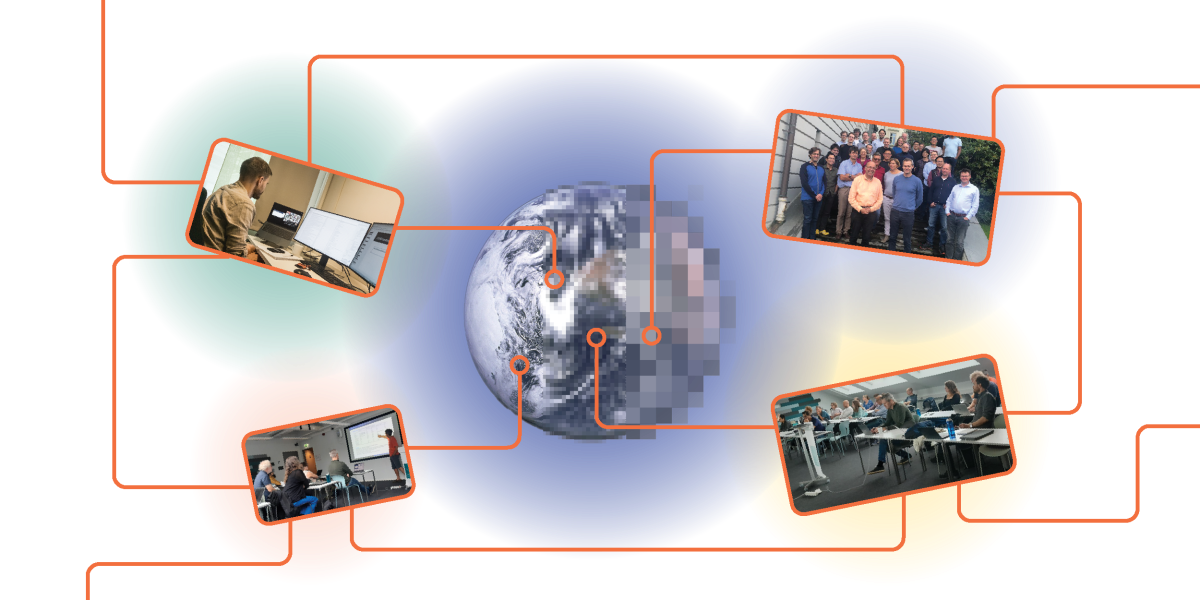
Each week, they gather digitally to discuss the globe—or more precisely, a representation of it. Together, they're developing a climate model.
"The climate is a complex system where everything affects everything," explains Aas, who holds a doctorate in geoscience.
The people behind the models
The climate system is exquisitely sensitive. Small changes in one place trigger consequences somewhere else entirely. Ice melting in the Arctic can alter the salt content of the ocean, which shifts ocean currents, which changes land temperatures, which affects precipitation patterns, which influences forests, which changes wildfire risk, which alters emissions, which impacts global temperature—and so on.
Aas explains that their climate model aims to recreate this system as accurately as possible, though perfect recreation remains impossible. Despite increasingly fine-resolution models, better understanding, and growing computing power, limits exist to how much detail any model can handle.
"The models divide the globe into boxes roughly 100x100 kilometers, and try to recreate the natural processes within these boxes, whether in the atmosphere or underwater," Aas explains.
Reality is the answer key—a world governed by fundamental physical laws. The model must simulate the physical, chemical, and biological processes visible outside your living room window, recreating the climate's evolution over the past 200 years. If it succeeds at that, the thinking goes, it can also project future conditions under specific scenarios.
We're back to data, calculations, models, and machines.
But without the people on the screen, nothing happens.
"These meetings are fantastic," says CICERO researcher Rosie Fisher enthusiastically.
Fisher is a climate modeler and ecophysiologist—in short, an expert on how biological processes interact. She ensures the land component of the model functions properly.
"We understand much about the climate, but not everything. Climate models have improved steadily over several decades, but ultimately, we need to meet and discuss where the model performs well and where it falls short," Fisher says.
A collaboration machine
This collaborative nature defines climate modeling work. No one is an expert on the entire world. Some specialize in oceans, others in the atmosphere, sea ice, or terrestrial systems.
They're experts on their boxes and what happens inside them. But no one fully understands what happens when these boxes interact.
"We might be satisfied with our land model. The forest grows and thrives. But then we connect it to the rest of the Earth system model, and suddenly the rain disappears in some places, and the forest dies. So we have to discuss across disciplines what went wrong," Fisher says.
The model Aas and Fisher are refining is called NorESM (Norwegian Earth System Model). The team that meets regularly works mainly in Oslo and Bergen.
The climate model's source code is open—anyone can download it. Though that doesn't mean just anyone can understand it.
Recent developments in the USA, where research institutions are losing funding and researchers their jobs, demonstrate how critical knowledge sharing is, according to Fisher.
"Open source code is important. The more people who use it and contribute, the better. Climate models become less dependent on individuals," Fisher says.
This approach helps ensure that climate knowledge persists regardless of shifting political winds. Still, she sees serious problems when entire fields are decimated, as is happening in the USA right now.
Relationships are important
"Many people underestimate how much interpersonal chemistry matters in research, and how long it takes to build trust between researchers and research environments," Fisher says.
She notes that while she represents the land model within the global climate model NorESM, she's far from alone in working on it. A dedicated team holds separate meetings to improve how land processes function.
This work also requires expertise from multiple fields—hydrology, ecology—where specialists work elsewhere. These professionals aren't necessarily eager to spend time assisting climate modelers. When they do help, it's the fruit of long-term relationship building. Such relationships erode when entire research communities vanish. Then the work must begin again from scratch.
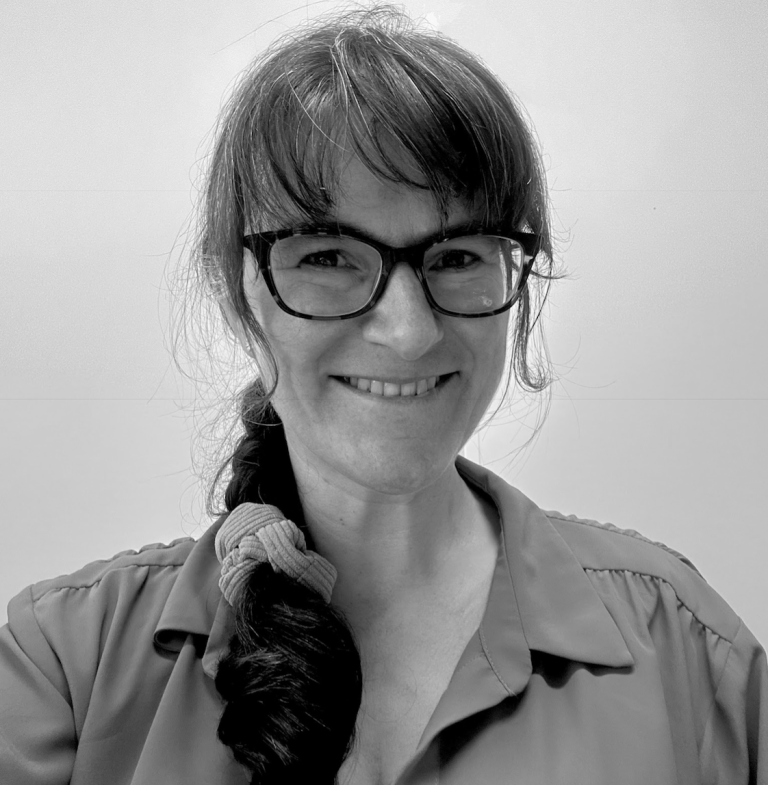
Back to the screen in Kjetil Aas's office, where each face represents an expert standing on the shoulders of a team, drawing on knowledge from an entire field. Behind the 20 heads are countless others.
And this is just one of several climate models.
When the UN climate panel issues its major reports, it draws on several dozen climate models,compared systematically to provide the most reliable projections of climate evolution. The comparison happens through a separate project, involving yet more experts.
"No single model is expected to describe reality 100 percent," Kjetil Aas explains.
Some models excel at simulating the tropics, while others perform better in the Arctic—like the Norwegian model. Together, they paint a picture of how the climate has changed and how it might evolve under different emission scenarios.
"Each model has its strengths and weaknesses," Aas says.
Like most people