
The Winding Road to 1.5 Degrees
To limit global warming to around 1.5 degrees, we must remove CO₂ from the atmosphere. Exactly how much can be removed is uncertain. The only thing that seems sure is that it will be a massive cleanup job. Nevertheless, many countries have this as a strategy to reach their climate goals.


"All the scenarios from the UN's Intergovernmental Panel on Climate Change (IPCC) that lead to a 1.5 degree world in 2100 rely on us removing CO₂ from the atmosphere," says CICERO researcher Glen Peters, who studies global emissions.
In the IPCC's graphs, this can look quite manageable: Emissions fall rapidly and effectively to zero sometime after 2050, before continuing below zero and stopping at a few billion tons of CO₂ on the negative side in 2100. Et voilá, we have limited warming to somewhere between 1.5 and 2 degrees.
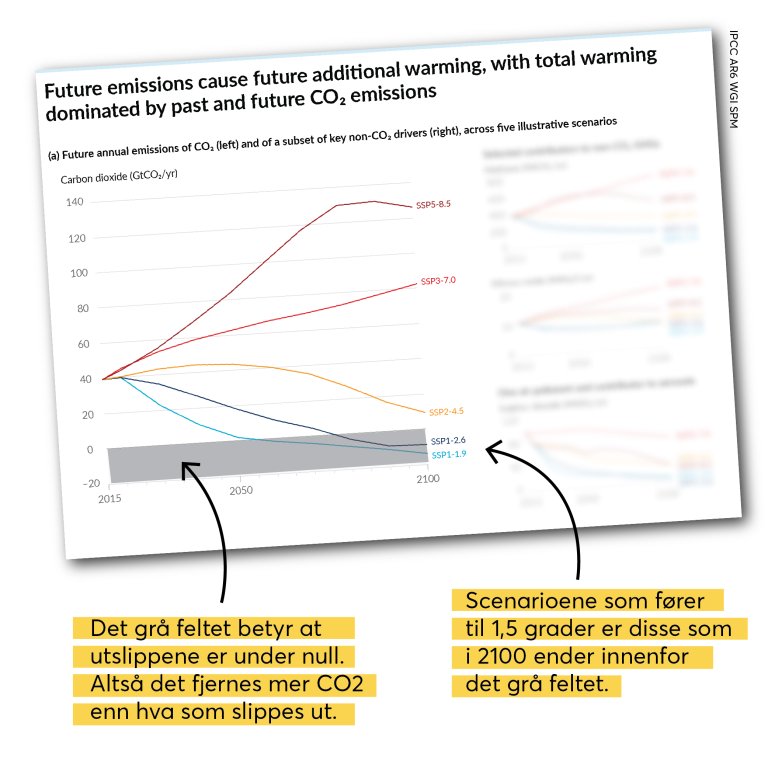
However, the thin lines in the IPCC graphs hide enormous technical and social challenges that must be overcome. How exactly are we going to remove all this CO₂?
Huge Scale and Demanding Solutions
There is a lot of CO₂ that needs to be removed from the atmosphere, so all the solutions to bring temperatures down to below 2 degrees are on a massive scale.
"Some extreme scenarios assume that up to 40 billion tons of CO₂ must be removed per year in 2100," says Peters.
The IPCC describes various ways to remove CO₂ from the atmosphere: It could be through forest and land management - by planting new trees or replanting deforested areas, bioenergy with carbon capture and storage, or technology that sucks CO₂ directly out of the air.
Bioenergy with carbon capture and storage, so-called BECCS, is the preferred solution in the models that lead to 1.5 degrees. BECCS means burning biological material, such as fast-growing trees or other plants in a power plant, capturing the emissions and storing them underground.
The idea is that the plants "eat" CO₂ as they grow, storing this as carbon until they either rot or burn. By harvesting the plants, burning them in a power plant, and then capturing and storing the emissions, CO₂ has been removed from the atmosphere while also generating electricity. Killing two birds with one stone.
One of the main challenges with this solution is that it is completely dependent on carbon capture and storage - a costly technology that is still only at the trial stage. The scenarios assume this technology will be in place and widespread by the middle of this century.
"CO₂ removal has a scaling problem. The amount of bioenergy with carbon capture and storage, and planting of new forests, that some of the scenarios call for, will require enormous land areas," says Peters.

According to Peters, globally we're talking about areas the size of India times two, covered with plants that are meant to be burned for bioenergy, or newly planted forests intended to absorb carbon. The UN Climate Panel's special report on land and land use describes such an expansion of arable land as unprecedented in history.
"The technical challenges are only one side of it. We have seen the resistance that the development of onshore wind power has triggered in Norway. In addition to overcoming technical obstacles, one must also have political acceptance to implement such measures," says Peters.
A Question of Priorities
However, Peters points out that these are scenarios, not predictions. The purpose of scenarios is to help us understand what possible futures could look like.
"The scale of CO₂ removal can easily make one feel discouraged, but if we dig deeper into the scenarios, the picture is more nuanced. As with everything else, it becomes a question of priorities and trade-offs," he says.
How much CO₂ needs to be removed depends on how much we want to reduce global warming, and how quickly we manage to cut emissions. There is a big difference in the amount of CO₂ removal needed to limit warming to 1.3 versus 1.5 degrees, for example. Or 1.9 for that matter. And if we cut emissions a lot and quickly, the need for CO₂ removal will be less than if we delay emission cuts.
"The IPCC assumes that 1.5 degrees will likely be exceeded around 2030, regardless of how quickly and how much we cut," says Peters.
He points out that when the temperature exceeds 1.5 degrees, we will also have more knowledge about what it actually means to bring the temperature back down using CO₂ removal. Then we will know more about how technically feasible it is, and can assess whether it is worth the effort.
"What is important today is that we must cut emissions quickly. CO₂ removal has no purpose if we do not get emissions down to zero rapidly," says Peters.
Advantageous to Postpone the Bill
But why are the models so fond of CO₂ removal, when it is so difficult?
"The models are programmed to find the path to a given temperature target, under given assumptions," says Ida Sognnæs at CICERO, who researches scenarios and global emissions.
According to Sognnæs, the models have been tasked with finding the most cost-effective way to limit global warming to 1.5 degrees in 2100. This has some consequences for which solutions the models choose. For example, it means that several models are very keen on the aforementioned bioenergy with carbon capture and storage.
As the models see it, it is not a problem that the technology behind carbon capture and storage is both costly and not fully developed. It is an advantage.
"When the model is to make its cost-effective choices, it is based on us living today. It places less emphasis on the fact that it may be expensive for the future population, and sees it as more advantageous to leave the bill and the job to those who come after us. Therefore, the answer in the model is more removal of CO₂," explains Sognnæs.
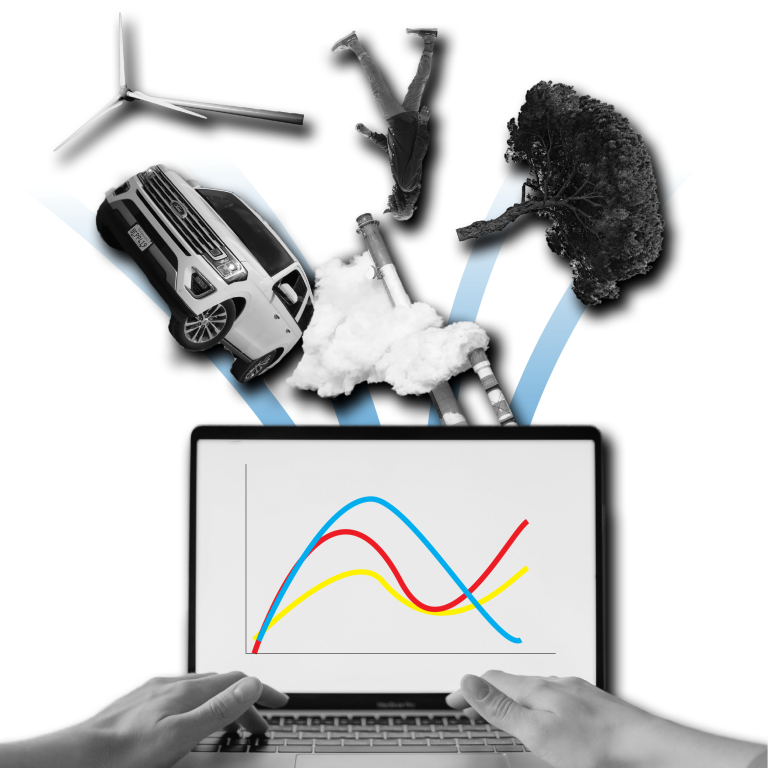
It is the limitations and assumptions entered into the model that help shape the answers it provides. You can compare it a bit to when you ask Google Maps to show you the fastest route between your house and work. Then you will get bicycle, car, walking and public transport as options. It may well be that it would be faster to be shot out of a cannon, or fly a helicopter, but Google Maps does not consider that relevant and omits it from the calculation. Google Maps also does not take into account whether you are blind, in a wheelchair, poor or rich. All such variables can affect what is the fastest route.
"The models make many assumptions, for example about renewable energy: How quickly it can be expanded, how much space there is for it and how cheap it can be, and so on. These assumptions vary from model to model and are difficult to get an overview of," says Sognnæs.
All these assumptions affect how much CO₂ removal is needed.
"Some models will, regardless of the choice of criteria, choose CO₂ removal, because they have such strong limitations on other options, or because they do not sufficiently model other options," says Sognnæs.
She emphasizes that data models are not neutral, and that there are ethical choices and assessments behind their calculations.
"We could imagine that the assumptions for the model were something other than cost-effectiveness. It could, for example, have been to reach a given temperature target in a way that reduces poverty and increases social justice. Then the model would have had to investigate other alternatives to reach its goal. But they don't do that," says Sognnæs.
Many Countries Believe CO₂ Removal is the Way to Go
According to Climate Action Tracker, an organization that monitors the world's climate targets, around 140 countries are considering "net zero" emission targets by a given point in time. Net zero means the emissions budget goes to zero: You remove as much as you emit. In other words, a number of countries are basing their climate targets on removing CO₂ from the atmosphere.
"The goal of net zero emissions is now normalized among politicians. And if you say yes to net zero, you are also saying yes to removing CO₂ from the atmosphere," says Professor Oliver Geden from the German Institute for International and Security Affairs.
Geden is the lead author of the part of the IPCC's sixth assessment report that looks at solutions to the climate challenge.
In the latest assessment report, Geden's working group writes that some CO₂ removal is necessary to achieve net zero emission targets, and to "zero out" emissions that will be difficult to cut. How this is to be done, and how it will reach levels that make a difference, depends on whether methods are developed that are sustainable and feasible.
According to the IPCC, tree planting, forest conservation, forest management and agroforestry are currently the most widespread methods for removing CO₂ from the atmosphere.
"CO₂ removal is not something that belongs to the future, it is happening now," says Geden.
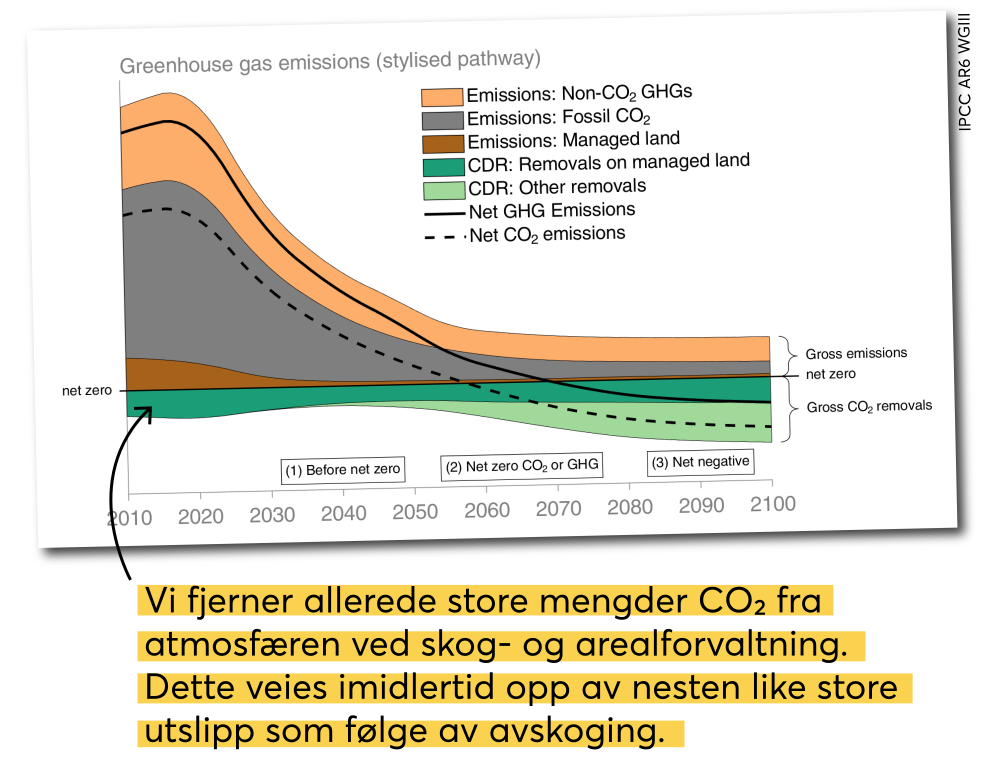
Large-scale CO₂ removal is not futuristic science fiction, but something we have been doing for a long time. Geden points out that through forest and land management, we remove around six billion tons of CO₂ from the atmosphere per year, depending a bit on how we calculate it. However, current management of forests and land also leads to emissions on the order of five billion tons, in the form of deforestation. But with reduced deforestation, improved land management and tree planting, emissions from this sector can be reduced to near zero, so that uptake becomes greater than emissions.
Ikke at dette er en enkel sak. Skogplanting kan komme i konflikt med for eksempel biologisk mangfold, og dårlig forvaltet skog kan i noen tilfeller føre til at karbonet slippes ut igjen etter kort tid. Og så er det en rekke utfordringer knyttet til rapportering og måling. For hva er forvaltet skog, og hva er bare skog?
Fortsatt viktig å kutte utslipp
– Vi er inne i en periode hvor folk for alvor jobber med å utvikle teknologi for CO₂-fjerning, og skalere den opp. Men det er viktig at utviklingen av løsninger og teknologi skjer samtidig som vi kutter i utslippene, sier Geden.
Tiden er ikke på vår side. Ifølge Klimapanelets spesialrapport om 1,5 grader, blir det vanskelig å nå målene i Parisavtalen hvis vi ikke har på plass storskala «billig, miljøvennlig og sosialt akseptable» løsninger for CO₂-fjerning i «god tid» før 2050.
For hvert år utslippene ikke går ned, får vi enda litt dårligere tid, og fester enda mer lit til at CO₂-fjerning er det som skal stanse global oppvarming.
– Det er et moralsk aspekt ved dette. Vi bør og skal fortsette å utvikle metoder for å fjerne CO₂ fra atmosfæren, men av hensyn til neste generasjon kan vi ikke gamble på at vi lykkes. Vi må handle som om vi ikke kommer til å lykkes med storskala CO₂-fjerning. Det betyr at vi må kutte utslipp raskt, og heller ta det som en positiv overraskelse hvis vi lykkes, sier Glen Peters.
Den 11. november publiserte prosjektet Global Carbon Budget fasiten for om utslippene har gått opp eller ned i 2022. Utslippene har økt igjen etter nedgangen under pandemien. Glen Peters jobber i Globale Utslipp-gruppen ved CICERO og er involvert i utslippsberegningene i Global Carbon Budget.


